
Deck Maintenance Tips Anderson & Oconee SC Guide 2026-27
Deck Maintenance Tips: Anderson and Oconee, South Carolina homeowners need to start with understanding SC’s humid climate. All Decked Out 864 LLC shares a year-round care routine for wood and composite decks.
South Carolina’s climate is a combination of heavy humidity, intense summer sun, and sudden downpours. This can put more stress on a deck than most homeowners realize.
More often than not, homeowners mistake the early stages of mold growth, wood rot, or fastener corrosion as routine wear.
It is crucial to understand that these minor problems can quickly turn into costly repairs once they set in. Our team of experts at All Decked Out 864 LLC works hard to ensure this doesn’t happen to you.
This guide walks through a year-round deck maintenance routine built for South Carolina’s climate, covering wood and composite care, what to check for during each season, and the warning signs that mean it’s time to call in a professional.
Why Deck Maintenance Matters in South Carolina’s Climate
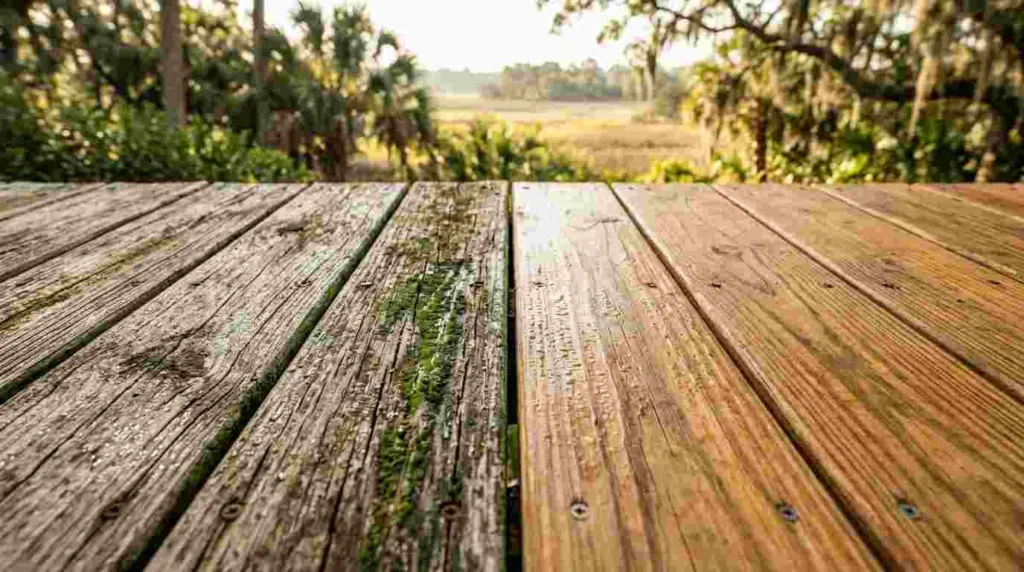
South Carolina’s climate is tough on outdoor structures in ways that aren’t always obvious. The Upstate and Midlands see a combination of high humidity, heavy summer rainfall, and long stretches of direct UV exposure, all of which accelerate the natural aging process of a deck.
For wood decks, humidity is the biggest concern. Moisture that gets trapped between boards or pools near the frame creates the perfect environment for mold, mildew, and eventually wood rot.
Composite decking resists rot, but it isn’t immune to surface mold or mildew buildup in shaded or poorly ventilated areas.
UV exposure adds a second layer of wear. Constant sun fades stain and finish faster than in drier climates, while heat cycling causes boards to expand and contract repeatedly, which loosens fasteners and stresses joints over time.
A maintenance routine that works for a deck in a drier, milder climate often isn’t enough here. SC homeowners need a slightly more proactive approach, especially around moisture control and UV protection.
Year-Round Maintenance Checklist
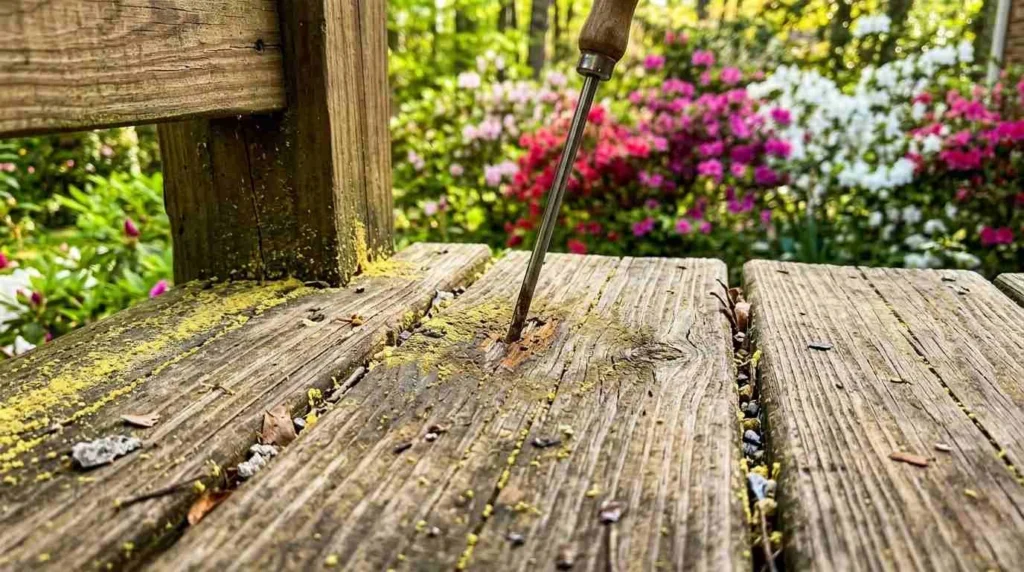
Spring
- Inspect boards, railings, and fasteners for winter damage
- Clean off pollen, mildew spots, and winter debris
- Check for soft or discolored boards before the humid season ramps up
- Reapply sealant if last season’s coat has worn thin
Summer
- Monitor high-traffic areas for fading from UV exposure
- Keep gaps between boards clear so air can circulate and moisture doesn’t sit
- Rinse off pollen, dirt, and organic buildup regularly
- Watch shaded areas closely as these are prime spots for mold growth
Fall
- Clear fallen leaves and debris before they trap moisture against the deck
- Do a full cleaning ahead of any staining or sealing project
- Check railings and steps before holiday gatherings increase foot traffic
- Inspect for loose fasteners after summer’s heat cycling
Winter
- Sweep off standing water, ice, or snow promptly to prevent pooling
- Avoid harsh de-icing chemicals that can damage wood or composite surfaces
- Check under furniture and planters for trapped moisture
- Use winter downtime for a full inspection before spring cleaning begins
Wood Deck Care: Cleaning, Staining & Sealing
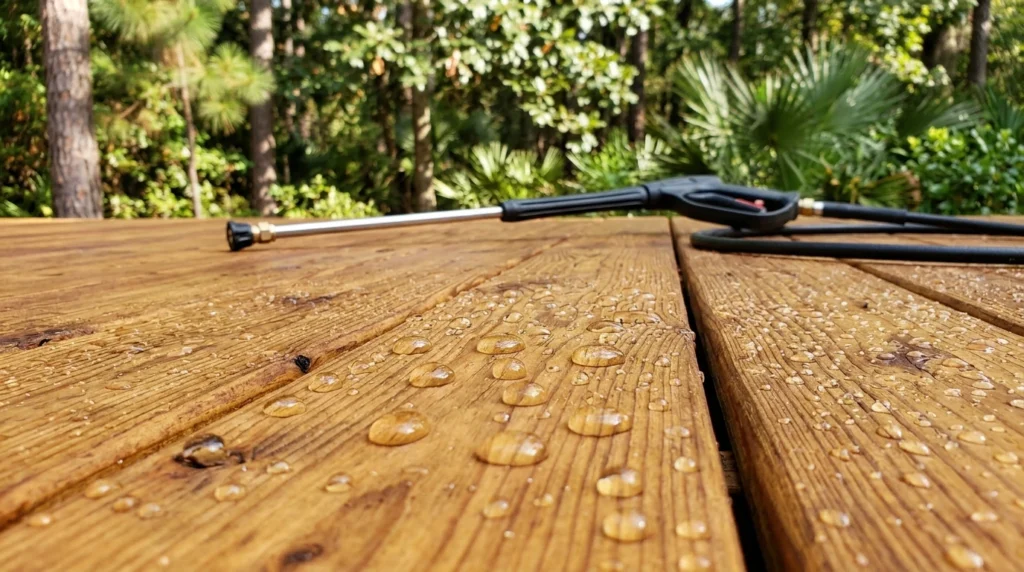
Wood decks need the most hands-on care, especially in South Carolina’s humid climate, but a consistent routine makes it manageable.
Pressure washing done right
Pressure washing is one of the fastest ways to clear off mildew, algae, and grime buildup — but it’s easy to overdo it.
Too much pressure or the wrong nozzle angle can strip wood fibers, leave streaking, or force water into seams where it gets trapped.
A lower-pressure setting held at a consistent distance, followed by full drying time before any stain or sealer goes on, gives the best results without damaging the boards.
Stain vs. sealer – what’s the difference?
These two get used interchangeably, but they do different jobs. Sealer is primarily about moisture protection, as it keeps water from soaking into the wood, which is critical in a climate prone to humidity and heavy rain.
Stain adds color and UV protection on top of that, helping slow down the fading that comes with SC’s long sunny stretches.
Many wood decks benefit from a stain-sealer combo product, or a sealer applied between staining cycles.
How often to restain in SC’s climate
Because of the added UV and moisture stress here, wood decks in South Carolina typically need restaining every 2–3 years – sometimes sooner for decks with heavy sun exposure or minimal shade.
A simple water-bead test (splash some water on the boards; if it soaks in instead of beading up, it’s time to reseal or restain) is an easy way to check between scheduled maintenance.
Composite Deck Care
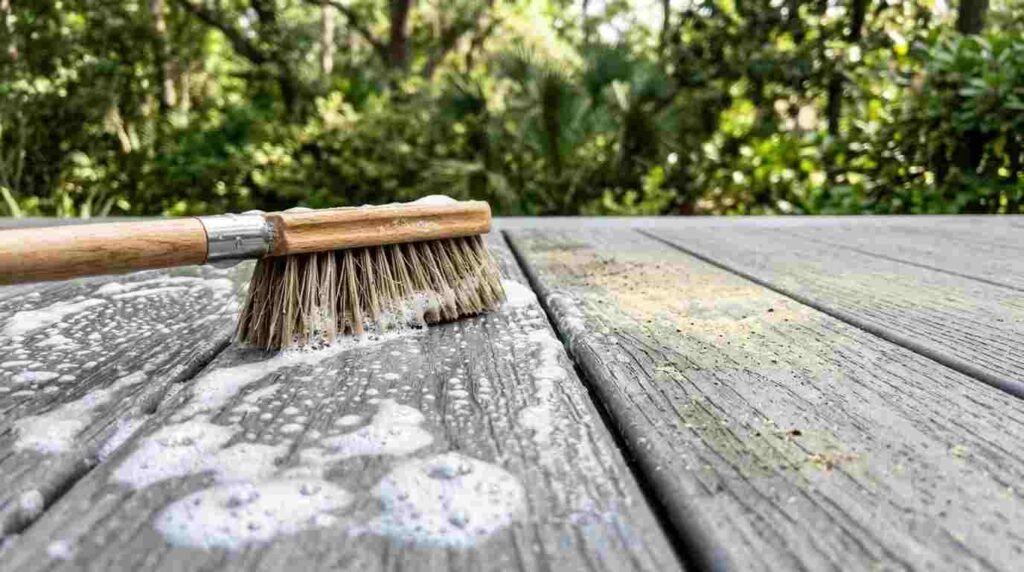
Composite decking is often marketed as low-maintenance, and compared to wood, it is — but low-maintenance doesn’t mean no-maintenance, especially in South Carolina’s humid climate.
Cleaning cadence
Composite boards don’t rot, but they can still collect dirt, pollen, and organic buildup on the surface.
A routine cleaning every few months, more often in shaded or heavily wooded yards, keeps the surface looking new and prevents buildup from turning into a bigger problem.
Mold and mildew care
Because composite doesn’t absorb moisture the way wood does, mold and mildew tend to stay on the surface rather than working into the material.
That’s good news for longevity, but it still needs to be addressed. A soft-bristle brush with warm water and mild soap usually handles it.
Areas with poor airflow or constant shade, common under pergolas or near tall fencing, need more frequent attention.
What to avoid
Harsh chemicals, bleach-heavy cleaners, and high-pressure washing can wear down composite’s protective outer layer over time, leading to fading or a rougher surface texture.
Manufacturers typically recommend mild soap and water or a cleaner specifically formulated for composite decking.
The bottom line for SC homeowners: composite still needs a seasonal check and occasional cleaning, but it skips the staining, sealing, and rot concerns that come with wood.
Wood vs. Composite Maintenance Comparison
| Maintenance Factor | Wood Decking | Composite Decking |
| Cleaning frequency | Every 1–3 months, more in shaded areas | Every 3–4 months, more in shaded/humid spots |
| Staining/sealing | Every 2–3 years in SC’s climate | Not required |
| Mold/mildew risk | Higher — moisture absorbs into wood | Lower — surface-level only |
| Pressure washing | Low pressure, careful technique needed | Generally safe, avoid high pressure |
| Lifespan impact of neglect | Rot, warping, structural weakening | Surface staining, fading (less structural risk) |
| Overall upkeep cost | Higher (materials + labor for staining/sealing) | Lower (mainly cleaning supplies) |
Signs Your Deck Needs Repair (or Replacement)
- Soft, spongy, or rotting boards: a clear sign moisture has worked into the wood; left untreated, this spreads and weakens the structure
- Loose or wobbly railings: often caused by fastener corrosion or wood swelling/shrinking from humidity cycles
- Rusted or popped-up fasteners: nails and screws that rise above the surface or show rust are a sign the deck’s hardware is failing
- Persistent mold or mildew: may indicate moisture trapped beneath the surface, not just a surface-level issue
- Structural give or bounce when walking across the deck: a sign the frame or joists may be compromised
- Gaps widening between boards: can signal warping or shrinkage
For minor issues, targeted repairs replacing a few boards, tightening hardware, resealing — usually solve the problem.
But when rot has spread, the frame is compromised, or repairs start piling up faster than they’re worth it, rebuilding is often the more cost-effective long-term move.
FAQs – deck maintenance tips South Carolina
How often should I clean my deck in SC?
Most decks in South Carolina benefit from cleaning every 1–3 months, with wood needing more frequent attention than composite.
When should I restain my wood deck?
Wood decks in SC’s climate typically need restaining every 2–3 years, though heavy sun exposure can shorten that timeline.
Does composite decking need maintenance in SC?
Yes, though far less than wood. Composite decking still needs periodic cleaning to remove dirt, pollen, and surface mold, especially in shaded or poorly ventilated areas, but it skips staining, sealing, and rot concerns entirely.
How do I prevent mold on my deck in South Carolina?
Keeping the deck surface clean, ensuring good airflow between boards, and addressing standing water quickly are the biggest factors. For wood, a properly maintained sealer also helps block the moisture mold needs to grow.
What are signs my deck needs repair or replacement?
Soft or rotting boards, loose railings, rising fasteners, persistent mold, and structural bounce are all warning signs. Minor issues can often be repaired, but widespread damage or a compromised frame usually points toward a full rebuild.
Between the humidity, UV exposure, and heavy seasonal rain, a little consistent maintenance like seasonal cleaning, timely staining or sealing, and keeping an eye out for early warning signs makes the difference between a deck that lasts decades and one that needs costly repairs within a few years.
But maintenance can only go so far. If your deck is showing signs of structural wear, or you’re simply ready for something new, it may be time to consider a rebuild designed to hold up to SC’s climate from the ground up.
Our team specializes in custom deck builds made to handle everything the Upstate throws at them. Explore your options with our Custom Deck Builder to start planning your next deck.