
Learn the top signs of foundation damage, including wall cracks, uneven floors, sticking doors, and when to schedule a foundation inspection.
Your home is likely the biggest investment you’ll ever make. It’s where you build your life, raise your family, and unwind after a long day. But beneath the beautiful paint colors, the custom cabinetry, and the memories you’re making, a silent partner is holding it all together: your foundation.
When your foundation is solid, you don’t give it a second thought. But when things start to shift underground, your entire home pays the price. Because soil movement, moisture damage, and seasonal expansion and contraction happen slowly over time, the early signs of foundation damage can be incredibly subtle. You might shrug off a sticky door or a tiny crack in the drywall as “old house quirks.”
The truth is, ignoring these warning signs of foundation problems doesn’t make them go away; it just makes them more expensive to fix later. Let’s dive into the 7 clear signs that your home is crying out for a structural assessment, and what you can do to protect your peace of mind.
Wall Cracks and Stair-Step Cracks in the Brickwork
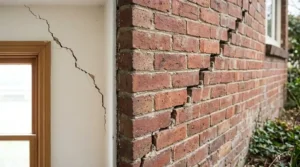
It is completely normal to panic a little bit when you see a crack in your wall. The good news is that not all cracks mean your house is falling down.
Minor hairline fractures can happen as a home naturally settles into its footprint. However, you need to watch out for structural cracks.
On the exterior of your home, keep an eye out for stair-step cracks that mimic the pattern of the brick mortar. Inside, look for diagonal cracks that zig-zag outward from the top corners of your doors and window frames.
If a crack is wide enough to fit the edge of a dime, or if one side of the crack feels completely uneven with the other, your home is experiencing structural foundation damage.
Drywall Cracks, Ceiling Cracks, and “Nail Pops”
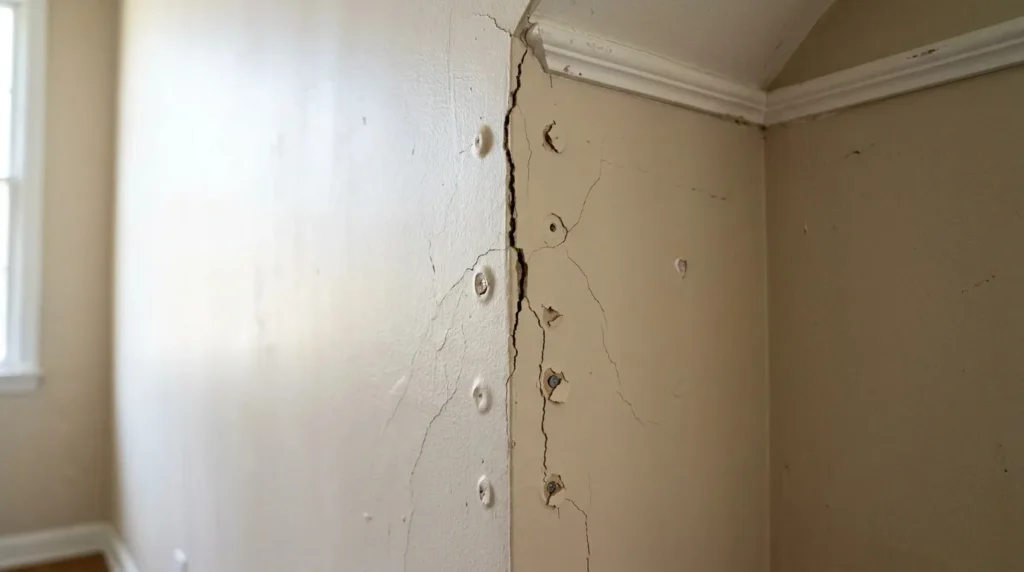
The interior of your home often tells the story of what’s happening beneath it. When a settling foundation or an active house is shifting, the drywall gets put under immense tension.
This results in visible drywall cracks and ceiling cracks, especially in large, open rooms or where walls meet the ceiling.
Another dead giveaway is a phenomenon called nail pops. When structural movement forces the wood framing behind your walls to twist or shift, it pushes the drywall screws or nails outward.
You’ll notice small, circular bumps, or little pops of drywall mud flaking off your walls. If you see a line of these pops forming, it’s a sign that the wall itself is under stress from a sinking foundation.
Doors and Windows That Suddenly Stick
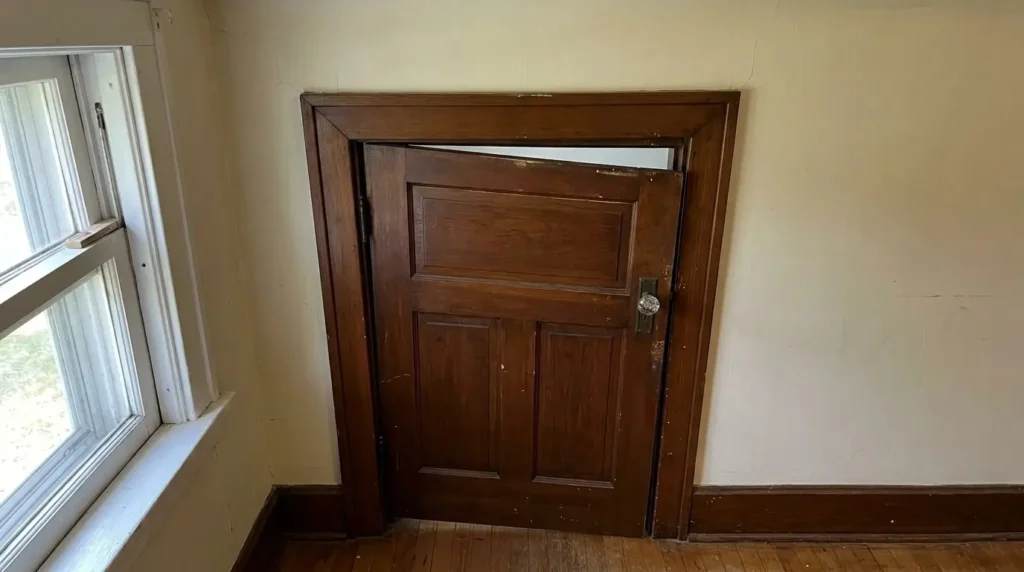
We’ve all experienced a door that gets a little stubborn during a humid summer. But if you have a bedroom door that suddenly refuses to latch, or a kitchen window that requires a massive test of strength just to slide open, you aren’t just dealing with weather changes.
Door misalignment and sticking windows happen because your house’s square frame is warping. As one corner of the foundation undergoes slab movement or sinks into the ground, the rectangular openings for your doors and windows distort into parallelograms.
If you look closely at the gap above a sticking door, you’ll often see that it’s completely uneven from left to right.
Uneven, Sloping, or Sagging Floors
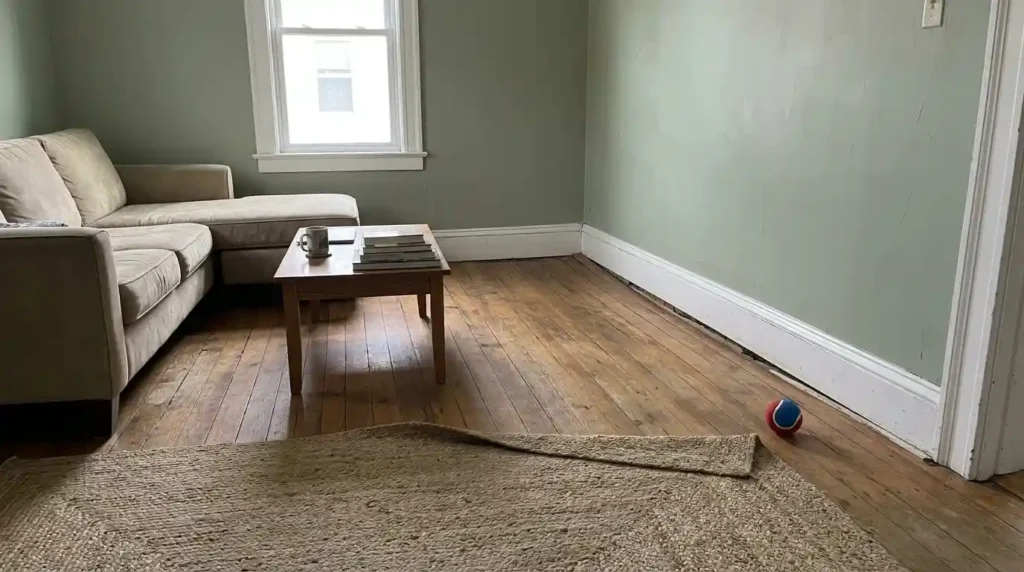
Do you ever feel like you’re walking slightly downhill in your own living room? Or maybe you’ve noticed a stray tennis ball or a dog toy consistently rolling toward the exact same corner of the room.
Uneven floors and sloping floors are classic, undeniable signs of foundation issues. Whether your home is built on a concrete slab or has a crawl space, a drop in the foundation support causes the load-bearing walls to sag.
In homes with crawl spaces, this can be linked to crawl space issues like rotted support posts or sagging joists. In slab homes, it means a section of the concrete is physically dropping into the earth.
Bowing Basement Walls and Crawl Space Trouble
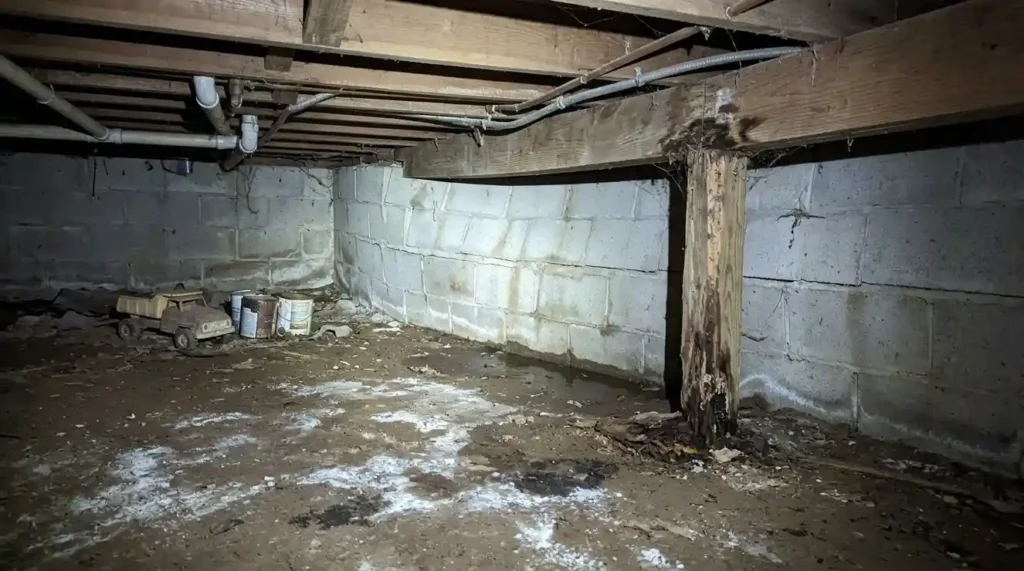
If your home has a basement or a deep crawl space, you need to regularly look at the walls themselves. If a wall looks like it is bulging or curving inward, you are dealing with bowing walls.
This happens due to something called hydrostatic pressure. When the soil around your home becomes completely saturated with water, it expands heavily, acting like a giant wedge pushing against your underground walls.
This intense pressure doesn’t just bow the walls; it often causes severe water intrusion, leading to mold, moisture damage, and a breakdown of your home’s core structural integrity.
Significant Concrete Slab Cracks
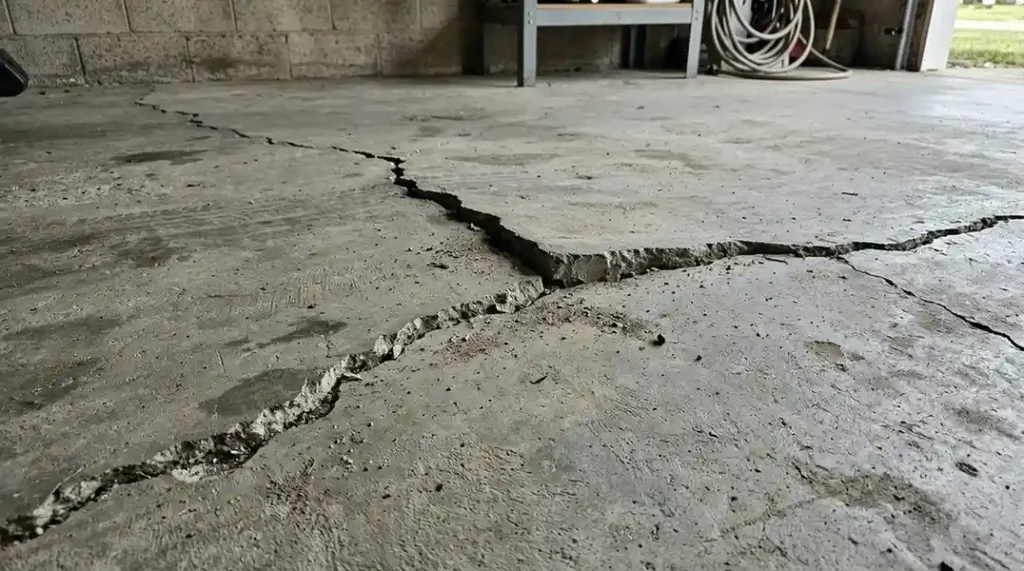
If your home is built on a concrete slab, the garage floor, patio, or unfinished utility rooms are great windows into the health of your foundation. While minor shrinkage cracks happen during the initial curing of concrete, large concrete slab cracks are a sign of trouble.
Pay close attention to any crack that is wider than a quarter of an inch, or cracks that create a vertical displacement. If you can trip over the edge of a crack because one side is higher than the other, it means you have active foundation settlement or foundation shifting occurring underneath the slab.
Gaps Around Exterior Window Frames or the Roofline
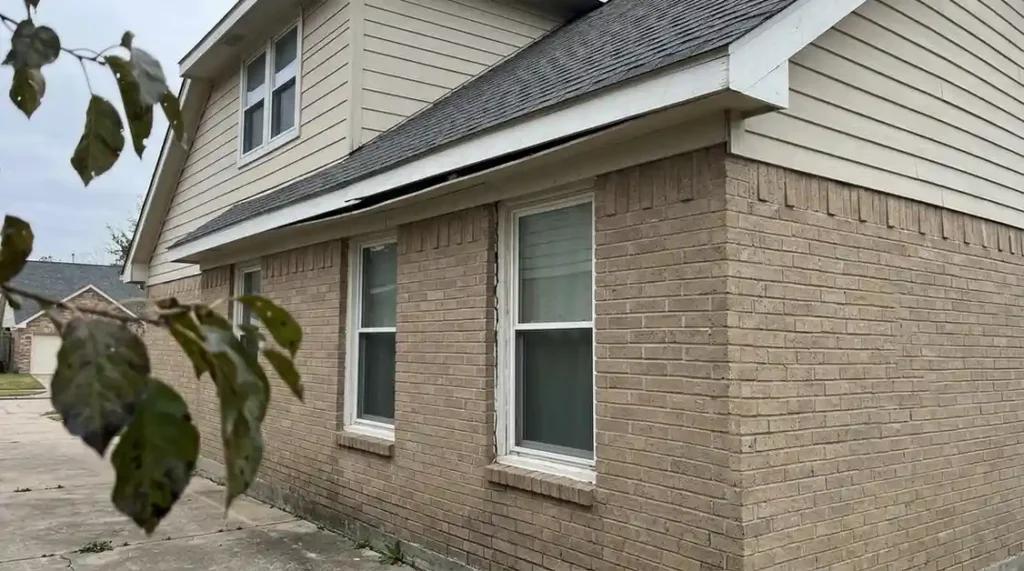
When a foundation sinks significantly, the rigid materials of your home simply cannot stretch to accommodate the movement. As a result, components begin to pull away from one another. Take a walk around the outside of your home and look upward.
Do you see gaps forming between the window frames and the exterior siding? Is the trim along your roofline beginning to separate from the brickwork?
These gaps allow water and pests to enter your home, accelerating the damage and proving that the house foundation problems are actively worsening.
The Reality Check: Does Foundation Damage Get Worse?
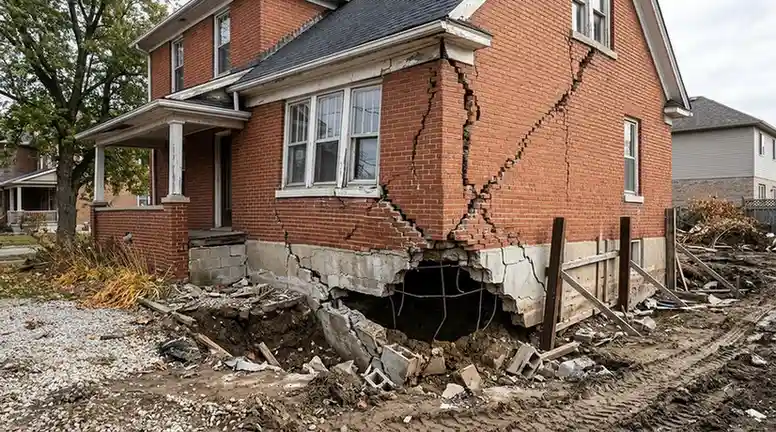
Yes, it always gets worse. A damaged foundation is a progressive issue. It never stabilizes on its own, and the longer you wait to address it, the more extensive—and expensive—the repairs become.
Catching it early might mean a simple drainage correction or targeted slab repair services. Waiting too long can mean major house leveling and massive cosmetic bills to fix the interior destruction.
Frequently Asked Questions (FAQ)
What are the first signs of foundation damage?
The earliest signs are usually very subtle: a single interior door that suddenly won’t stay open or closed, fine hairline cracks appearing over door frames, or a few nail pops appearing in a row down a hallway’s drywall.
Are cracks in walls always foundation problems?
Not necessarily. Houses expand in the summer heat and contract in the winter cold. Small, vertical cracks (less than 1/8 inch wide) are often just cosmetic stress cracks from this normal cycle.
When should I worry about foundation cracks?
You should call a professional if the cracks are wider than a quarter-inch, if they are continuously growing over a few months, if water is leaking through them, or if the wall on one side of the crack feels physically pushed out further than the other.
Can foundation damage be fixed?
Yes! Modern structural repair services have advanced tremendously. Utilizing techniques like hydraulic piering, house leveling, underpinning, and comprehensive crawl space repair, professionals can completely stabilize your home and, in many cases, lift it back to its original position.
Can poor drainage cause foundation damage?
Absolutely. In fact, poor drainage is the number one cause of foundation failure. When rainwater isn’t guided away from your home, it saturates the soil around your foundation. This causes the soil to weaken and wash away, or exert immense pressure on the walls when it swells.
Is uneven flooring a foundation issue?
In the vast majority of cases, yes. If your floors are sloping, bouncing, or separating from the baseboards, it means the structural foundation damage below has caused the subfloor supports to lose their level footing.
Guard Your Home’s Future: Schedule an Inspection
Your home is too precious to leave to chance. If you’ve walked through this list and checked off a few of these signs, don’t let anxiety cause you to stall.
Knowledge is power, and knowing exactly what is happening beneath your feet is the first step to saving your home.
At All Decked Out 864 LLC, we specialize in professional Grading & Foundations Services. We know that a lasting home starts with a perfectly graded landscape and a rock-solid base.
Whether you need a comprehensive structural assessment, drainage restructuring to stop water intrusion, or specialized foundation crack repair, our local team is here to guide you with honesty and transparency.
Stop guessing and start protecting your investment. Contact us now to schedule your foundation inspection service!